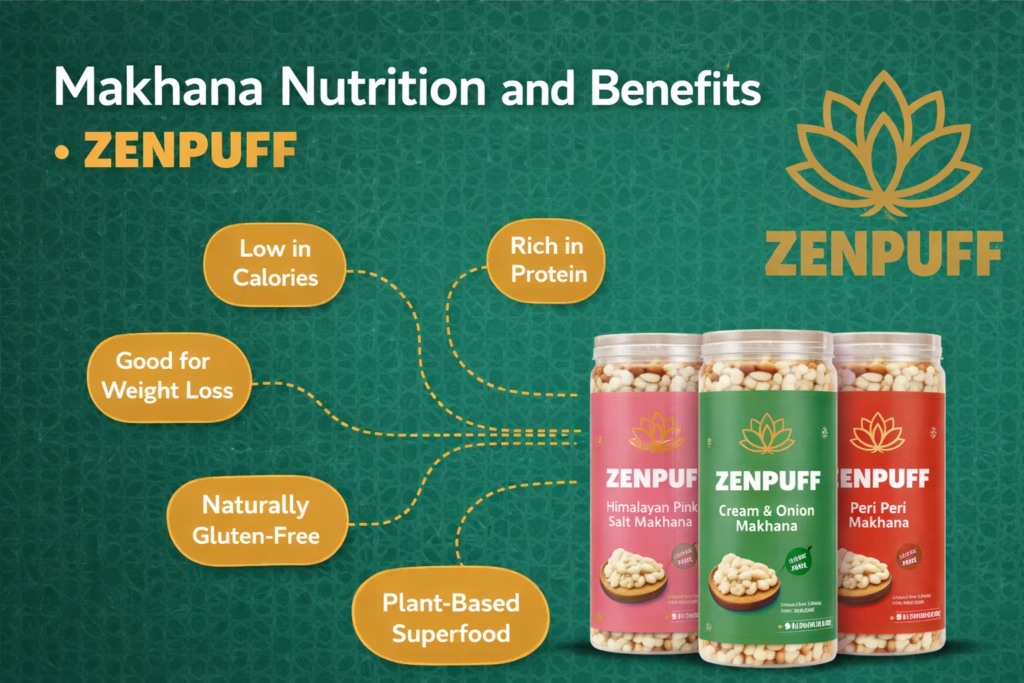
Makhana Nutrition and Benefits – Zenpuff
Have you ever picked up a snack and wondered whether it is truly nourishing your body? In today’s fast-paced lifestyle, snacking has become frequent — but quality often gets compromised.
Makhana, also known as fox nuts or lotus seeds, is emerging as a smart, nutrient-dense alternative to conventional processed snacks. At Zenpuff, we focus on delivering makhana that preserves its natural nutrition while enhancing taste through careful roasting and seasoning.
This article explores makhana nutrition and benefits in depth, supported by nutritional data and research insights, helping you understand why this traditional food is gaining modern recognition.
What Is Makhana?
Makhana is derived from the seeds of the Euryale ferox plant, cultivated primarily in India. The seeds are harvested from ponds, dried, roasted, and popped to create the light, crunchy form widely consumed today.
Unlike deep-fried snacks, makhana undergoes minimal processing. This helps retain its natural nutrients and makes it suitable for health-conscious individuals. The increasing global demand for plant-based and functional foods has brought makhana into focus as a clean-label snack option.
Makhana Nutrition Profile
According to food composition data and available research, the approximate nutritional value per 100 grams of makhana is:
Calories: 347 kcal
Protein: 9–10 grams
Carbohydrates: 76–77 grams
Dietary Fiber: 14–15 grams
Fat: 0.1–0.5 grams
Calcium: ~60 mg
Iron: ~1.4 mg
Magnesium: ~67 mg
Potassium: ~500 mg
This nutritional profile highlights several important characteristics:
• Very low fat content
• High dietary fiber
• Moderate plant-based protein
• Presence of essential minerals
Such a combination is uncommon in traditional snack categories, especially when compared with fried chips, namkeen mixtures, or refined carbohydrate-based foods.
Rich in Antioxidants
Oxidative stress is associated with aging and various chronic diseases. Lotus seeds contain antioxidant compounds such as flavonoids that help neutralize harmful free radicals in the body. Laboratory studies on lotus seed extracts demonstrate measurable antioxidant activity. Antioxidants support:
i. Reduction of inflammation
ii. Protection against cellular damage
iii. Support for long-term metabolic health
Regular inclusion of antioxidant-rich foods contributes positively to overall well-being.
Supports Heart Health
Cardiovascular disease remains one of the leading health concerns globally. Diet plays a central role in prevention and management.
Makhana is naturally:
i. Low in saturated fat
ii. Free from cholesterol
iii. Rich in potassium and magnesium
Potassium helps regulate blood pressure by balancing sodium levels in the body. Magnesium supports proper heart rhythm and vascular function. Replacing deep-fried snacks with roasted makhana may help reduce overall unhealthy fat intake, contributing to improved heart health outcomes over time.
High in Protein and Fiber
Satiety — the feeling of fullness — is strongly influenced by protein and fiber intake.
Per 100 grams, makhana provides approximately 9–10 grams of protein and over 14 grams of dietary fiber. Fiber supports digestive health and slows carbohydrate absorption, promoting stable blood sugar levels. Protein aids muscle maintenance and appetite regulation.
The combined effect supports:
i. Hunger control
ii. Reduced overeating
iii. Sustained energy levels
This makes makhana a practical choice for mid-day or evening snacking.
Helps Manage Blood Sugar
Managing blood sugar levels is critical for individuals with insulin resistance or diabetes risk. The fiber in makhana slows digestion and carbohydrate absorption. Compared to refined snacks, makhana produces a more gradual rise in blood glucose levels.
Research on lotus seed components suggests potential anti-diabetic properties due to antioxidant and anti-inflammatory mechanisms, though further human studies are required. Replacing high-sugar snacks with roasted makhana can be a supportive dietary modification.
Beneficial for Weight Management
Weight management depends largely on calorie control and satiety.
Makhana offers:
i. Low fat content
ii. High fiber density
iii. Moderate protein levels
Thirty grams of roasted makhana provides a satisfying snack portion with considerably lower fat than fried alternatives. Consistent dietary swaps — such as replacing fried snacks with makhana — can contribute to gradual, sustainable weight control.
Supports Digestive Health
Dietary fiber is essential for proper digestive function.
The fiber content in makhana helps:
i. Promote regular bowel movements
ii. Support gut microbiota balance
iii. Reduce constipation risk
A healthy digestive system influences immunity, metabolism, and nutrient absorption efficiency. Additionally, makhana is naturally gluten-free, making it suitable for individuals with gluten sensitivity when processed in controlled environments.
Contributes to Bone Health
Makhana contains calcium and magnesium, both essential for maintaining bone structure and density. Calcium contributes to bone strength, while magnesium assists in calcium metabolism and utilization. Although makhana should complement rather than replace primary calcium sources, it adds to daily mineral intake.
Traditionally Recognized in Ayurveda
In traditional Indian dietary systems, makhana is considered cooling and nourishing. It has been used during fasting periods and in restorative diets.
Traditional beliefs attribute the following qualities to makhana:
i. Support for vitality
ii. Digestive comfort
iii. Sustained energy
Modern nutritional analysis aligns with its mineral-rich and antioxidant-containing profile.
Suitable for Multiple Diet Patterns
Makhana fits well within various dietary approaches:
i. Vegetarian diets
ii. Vegan diets
iii. Gluten-free diets
iv. Clean eating routines
v. Calorie-controlled plans
Few snack options combine versatility with nutritional density in this manner.
Practical Ways to Include Makhana
At Zenpuff, makhana can be enjoyed in multiple forms while preserving its nutritional integrity.
i. Lightly roasted with Himalayan pink salt
ii. Seasoned with peri peri spices
iii. Cream and onion flavored
iv. Added to trail mixes
v. Used in traditional desserts such as kheer
Moderate portion sizes and mindful seasoning ensure maximum benefit.
Considerations and Moderation
Makhana is generally safe for most individuals when consumed in reasonable quantities.
However:
i. Excessive intake may cause bloating due to high fiber
ii. Flavored variants may contain added sodium
As with any food, balance and portion control remain essential.
Conclusion
Makhana stands out as a nutrient-dense, low-fat, high-fiber snack supported by both traditional usage and modern nutritional data.
Key characteristics include:
i. Low fat content
ii. High fiber density
iii. Moderate plant-based protein
iv. Presence of antioxidants
v. Mineral richness
vi. Compatibility with multiple diets
At Zenpuff, the objective is to offer makhana that maintains these nutritional strengths while delivering satisfying flavor.
Smart snacking is not about elimination — it is about intelligent substitution. Replacing heavily processed snacks with roasted makhana is a practical step toward better long-term health outcomes.
Stay connected with Zenpuff for expert insights on healthy snacking, makhana nutrition updates, and new product launches. Follow us on social media for daily wellness tips, exclusive offers, and behind-the-scenes content. Join the Zenpuff community and make smarter snacking a lifestyle choice.
Instagram | Facebook | LinkedIn | Twitter
Eat clean. Snack smart. Choose Zenpuff.

Hi, I’m Kundan, the crunch-obsessed mind behind Zenpuff! My mission is simple: to prove that healthy snacking doesn’t have to be boring. When I’m not dreaming up new Makhana flavors or exploring the roots of mindful eating, you can find me sharing my favorite ‘Zen’ tips with our community. Let’s make every bite count!